
What Does a Sales Funnel Do for Your Business?
A potential customer finds your business, likes what they see, and submits a form asking for more information. Then the phone rings, a job runs long, and that inquiry sits unanswered until the next day. By then, they may have contacted three competitors.
That gap is exactly why business owners ask, “what does a sales funnel do?” A sales funnel creates a clear path from first interest to a booked appointment, signed proposal, or purchase. More than a webpage or a form, it is a connected process that helps your business capture attention, collect lead information, follow up promptly, and move qualified prospects toward a decision.
For local service businesses and professional practices, that process matters because most people do not book on their first visit. They compare options, read reviews, check availability, and wait until the need feels urgent. A well-built funnel keeps the conversation moving while your team focuses on serving customers.
What Does a Sales Funnel Do?
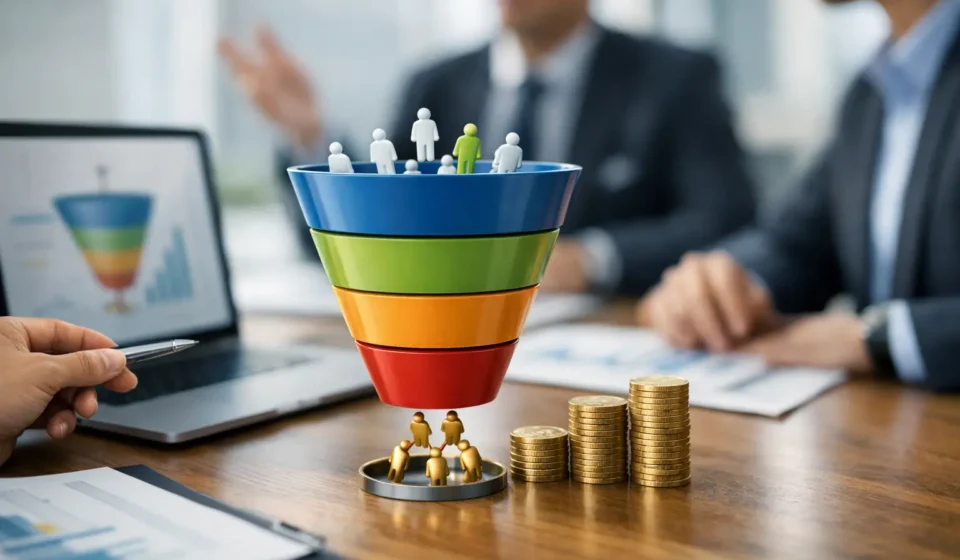
At its core, a sales funnel turns marketing activity into an organized customer journey. It helps you answer four practical questions: How do people find us? What should they do next? How do we stay in touch? How do we know which leads are ready to buy?
The funnel begins when someone sees your business through a Google search, social media post, referral, local ad, or email. Instead of sending every visitor to a general website page and hoping they figure things out, a funnel gives them one relevant next step. That might be requesting an estimate, scheduling a consultation, claiming an introductory offer, or downloading useful information.
Once they respond, the funnel records the inquiry in your CRM and triggers the right follow-up. For example, a homeowner requesting a roofing estimate might receive a confirmation text within minutes, an email explaining what happens next, and a scheduling option. A financial professional’s prospect may receive a consultation reminder and a short explanation of the documents to prepare.
The result is simple: fewer leads get lost, and more interested people receive the confidence and information they need to take action.
A Funnel Does More Than Collect Contact Forms
A contact form is only the starting point. If the form sends an email to an inbox nobody checks consistently, it can create the appearance of lead generation without the revenue benefit. A sales funnel connects lead capture with a repeatable response system.
A practical funnel usually includes a focused landing page, a clear call to action, a form or scheduling tool, CRM lead tracking, and automated email or SMS messages. Each part has a job. The landing page explains the offer. The call to action reduces uncertainty. The form captures details. The CRM keeps the lead visible. Automation makes sure the person hears from you quickly and consistently.
This structure also makes your marketing easier to manage. Instead of guessing whether your website, ads, and social posts are working, you can see where people drop off. Maybe visitors are landing on the page but not filling out the form. Maybe they submit a form but rarely schedule. Those signals tell you what to improve.
How a Sales Funnel Moves People Toward a Decision
Not every prospect needs the same message. Someone searching “acupuncturist near me” may be ready to book today. Someone looking for “how acupuncture helps back pain” may still be researching. A sales funnel accounts for that difference without requiring your team to write every message manually.
It attracts the right audience
The top of the funnel brings in people who may need your service. Local SEO, paid ads, referral campaigns, social content, and targeted landing pages can all play a role. The goal is not just more traffic. It is traffic from people in your service area who have a real reason to contact you.
For a local business, relevance beats volume. One hundred visitors outside your service area are less useful than ten nearby visitors who need help this week.
It gives each visitor a clear next step
Confusing websites create hesitation. If a visitor has to search through multiple pages to understand what you offer or how to contact you, many will leave.
A focused funnel page removes that friction. It speaks to one service, one audience, and one primary action. A med spa may use a page for a specific treatment consultation. A contractor may use one for free project estimates. An accounting firm may use one for tax planning appointments. The message can be specific because the desired outcome is specific.
It follows up while interest is fresh
Speed matters. A fast confirmation tells a prospect their request did not disappear into a void. Automated messages can confirm receipt, answer common questions, offer a scheduling link, and remind the lead about an upcoming appointment.
Automation does not mean sounding robotic. The best follow-up feels helpful and timely. It should use plain language, set expectations, and make it easy for the customer to reply or book.
It supports your team’s personal outreach
A funnel should not replace real conversations when real conversations are needed. High-value services, complex projects, and relationship-based businesses often require a phone call or consultation before a customer commits.
What the funnel does is make those conversations more productive. Your team can see where the lead came from, what service they asked about, whether they opened a message, and whether they scheduled. That context helps staff respond with less back-and-forth and more relevance.
Why Sales Funnels Matter for Local Businesses
Local businesses often depend on a small number of missed opportunities turning into a meaningful revenue problem. A few unreturned calls, forgotten quote requests, or missed appointment reminders can add up quickly over a month.
A sales funnel creates consistency. It gives every inquiry a reliable experience, even when business is busy. It can reduce no-shows through reminders, help revive leads that did not book immediately, and keep your pipeline organized so nobody has to rely on memory or sticky notes.
It also improves accountability. When leads are tracked in one system, you can see how many inquiries become appointments, how many appointments become customers, and which marketing sources produce the best opportunities. This is especially useful when you are investing in local SEO, paid ads, or social media and want to know what is actually producing results.
There is a trade-off, though. A funnel cannot fix an unclear offer, poor customer service, or a service area with little demand. It also should not be overly complicated. Many small businesses do better with one strong funnel for their most profitable service than with five disconnected campaigns that nobody has time to manage.
What a Simple Sales Funnel Can Look Like
Imagine a Northern California landscaping company promoting seasonal yard cleanup. A homeowner finds the offer through a local Google search and lands on a page showing the service, the areas served, proof of past work, and a short estimate request form.
After submitting the form, the homeowner receives an immediate text confirming the request. They are offered a link to choose an estimate time. Their details are added to the CRM, where the office team can see the request and follow up. If they do not schedule, a friendly reminder goes out the next day. Once the estimate is booked, appointment reminders reduce the chance of a missed visit.
Nothing about that process is flashy. It is simply organized. Yet it can make a major difference compared with relying on a generic contact page and manually chasing every lead.
The same framework works for an acupuncture practice offering new-patient consultations, a financial advisor offering retirement planning calls, or a home services company booking inspections. The details change, but the job of the funnel remains the same: make it easier for the right person to become a customer.
Building a Funnel That Fits Your Business
Start with one revenue-focused goal. Choose a service that is profitable, easy to explain, and frequently requested. Then define the action you want prospects to take, such as booking, requesting a quote, or calling your office.
From there, build the supporting system around that action. Your page should answer the questions a serious prospect will have: who the service is for, what they receive, why they should trust you, where you serve, and what happens after they reach out. Keep the form short enough to complete on a phone, but detailed enough to help your team respond effectively.
Finally, decide what should happen after the form is submitted. At minimum, the lead should receive an immediate confirmation and your team should receive a clear notification. For many businesses, adding scheduling, reminders, and a short follow-up sequence will create even better results.
The best funnel is not the one with the most steps. It is the one that makes the next step obvious for customers and manageable for your team. When your website, CRM, scheduling, and follow-up work together, growth becomes less about chasing every inquiry and more about building a system that is ready when the next customer raises their hand.