

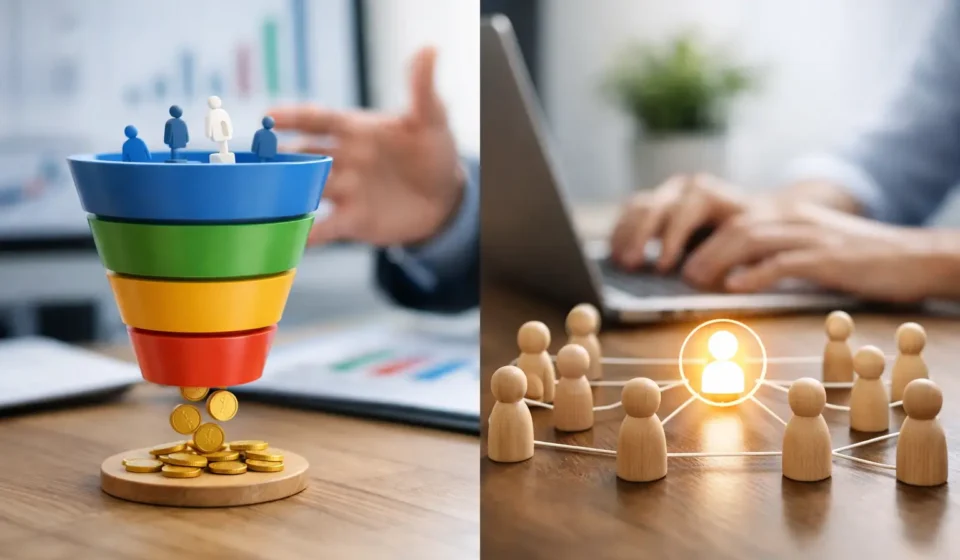
Sales Funnel vs Lead Generation Explained
A lot of small business owners think they have a lead problem when they actually have a conversion problem. They pay for ads, post on social media, or invest in SEO, but inquiries stay inconsistent and appointments never quite match the traffic. That is where the confusion around sales funnel vs lead generation starts. These two ideas are connected, but they are not the same thing, and knowing the difference can save you time, money, and a lot of frustration.
Sales funnel vs lead generation: what is the difference?
Lead generation is the process of attracting potential customers and getting them to raise their hand. That might mean filling out a form, calling your office, booking a consultation, downloading a guide, or responding to an ad. It is about creating interest and capturing contact information from people who may need your service.
A sales funnel is the full path someone takes from first contact to paying customer. It includes lead generation, but it goes further. The funnel covers what happens after the click, after the form submission, and after the first inquiry. It is the system that moves a person from curious to qualified to booked.
A simple way to think about it is this: lead generation gets attention, while a sales funnel turns that attention into revenue. If your business is bringing in traffic but not enough appointments, your lead generation may be working while your funnel is leaking.
Why local businesses mix them up
For service-based businesses, the line between marketing and sales often feels blurry. A chiropractor might run local ads and get clicks. A financial advisor might improve local SEO and start getting more website visits. An acupuncturist might launch a landing page and finally see more inquiries. Those are all wins, but they only solve the front end of the problem.
If the website is slow, the message is unclear, the form is too long, the scheduling process is clunky, or no one follows up quickly, those leads do not turn into much. From the owner’s point of view, it feels like lead generation failed. In reality, the funnel broke further down the path.
This is one reason disconnected tools create so many problems for small businesses. One platform drives traffic, another captures forms, another handles email, and follow-up may still be manual. When those pieces do not work together, you lose momentum right when a prospect is most interested.
What lead generation actually includes
Lead generation usually focuses on bringing the right people in. That can come from local SEO, paid ads, social media, referral campaigns, landing pages, Google Business Profile visibility, or website offers. The goal is to get a potential customer to take one clear action.
For a local business, good lead generation is not just about volume. It is about relevance. A hundred random clicks are less valuable than ten inquiries from people in your service area who are ready to book. That is why messaging, targeting, and offer structure matter so much.
A strong lead generation strategy usually answers a few basic questions fast. What do you offer? Who is it for? Why should someone trust you? What should they do next? If those answers are buried or vague, traffic will not convert well no matter how much you spend to get it.
What a sales funnel includes after the lead comes in
Once a lead is generated, the funnel takes over. This is where many businesses either build momentum or lose it.
A sales funnel may include the landing page, contact form, thank-you page, automated text or email follow-up, appointment scheduling, reminders, sales calls, consultation workflows, and re-engagement for people who did not book the first time. It is not just a page. It is the sequence.
That sequence matters because most people do not make decisions instantly. Some are comparing options. Some are busy. Some need reassurance. A good funnel keeps the conversation moving without making your team chase every lead manually.
For example, if someone fills out a consultation form at 8:30 p.m., waiting until the next afternoon to respond is risky. An automated confirmation, a scheduling link, and a clean follow-up sequence can keep that lead warm while your business is closed. That is funnel thinking.
Sales funnel vs lead generation in real business terms
If you want a practical distinction, think of lead generation as demand creation and capture. Think of the funnel as demand conversion.
A local law firm might generate leads through Google search. A med spa might generate leads through social ads. A tax professional might generate leads through a seasonal landing page. But if prospects land on a generic homepage, wait days for a reply, or have no easy way to book, the return on that marketing drops fast.
On the other hand, a business with a moderate amount of traffic can outperform competitors if its funnel is tight. Clear offer. Simple page. Short form. Fast response. Automated reminders. Consistent follow-up. Better conversion often beats more traffic.
That is the trade-off many owners miss. More lead generation feels like growth because it is visible. Better funnel performance feels quieter, but it usually improves ROI faster.
Which matters more?
It depends on where your bottleneck is.
If nobody is finding your business, lead generation is the bigger issue. You may need stronger local SEO, better ad targeting, a more focused offer, or a website that actually supports search visibility.
If people are visiting and inquiring but not booking, the funnel is the issue. You may need better landing pages, stronger calls to action, faster follow-up, CRM automation, or a smoother scheduling process.
Most growing businesses need both. Traffic without a funnel wastes money. A great funnel without traffic sits idle. The best results come from building a connected system where lead generation and conversion support each other.
How to tell what is broken
You do not need advanced analytics to spot the gap. A few simple patterns can tell you a lot.
If your site traffic is low and branded searches are doing most of the work, visibility is likely the problem. If traffic looks healthy but very few people call, fill out forms, or book, your offer or page experience may be weak. If leads come in but appointments stay low, follow-up is probably the issue. If appointments happen but sales close rates are poor, the problem may be qualification, messaging, or the consultation process itself.
This is why looking at only one metric can be misleading. Cost per lead sounds useful, but if those leads never turn into customers, it is not enough. Booked appointments, show-up rates, and closed business tell a more complete story.
What local businesses should build first
For most service businesses, the smartest move is not choosing sales funnel vs lead generation as if one replaces the other. It is building the simplest version of both.
Start with a clear entry point. That could be a service page, landing page, local SEO page, or ad campaign built around one offer. Then make sure the next steps are easy. Use a focused call to action, a short contact form, online scheduling if it fits your process, and automated follow-up so leads do not go cold.
From there, improve the weak spots. If visibility is low, invest more in lead generation channels. If response time is slow, improve automation. If prospects are dropping off before booking, tighten the page copy and remove friction.
This is where an integrated setup makes a real difference. When your website, landing pages, CRM, scheduling, and follow-up tools are connected, you can see where leads come from and what happens next. That clarity helps you make better decisions without managing a pile of disconnected software.
The smarter way to think about growth
Sales funnel vs lead generation is not really a battle. It is a sequence. First, people need to find you. Then they need a simple path to trust you, contact you, and take action.
If your business has been chasing more traffic without seeing better results, step back and look at the full customer journey. The problem may not be how many people you reach. It may be what happens after they respond. When those pieces work together, growth feels less like guesswork and more like a system you can build on.