

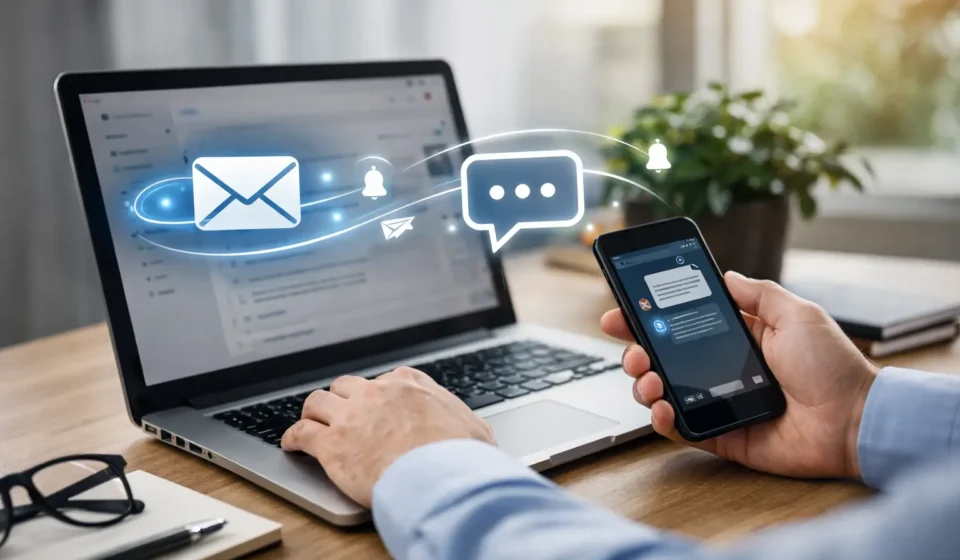
Email and SMS Follow Up Automation That Converts
A new lead comes in at 8:17 p.m. from your website. You are with family, finishing a late appointment, or simply off the clock. By 8:22, that lead has already filled out another form with a competitor. That is exactly where email and sms follow up automation makes a real difference. It keeps your business responsive when you cannot personally jump on every inquiry the second it arrives.
For local service businesses, speed matters, but consistency matters even more. Most missed opportunities do not happen because the service is bad. They happen because follow-up is delayed, forgotten, or too manual to keep up with. If your team is relying on sticky notes, inbox flags, and good intentions, leads will slip through.
Why email and sms follow up automation matters
A lot of business owners think automation is mainly about saving time. It does save time, but that is not the biggest win. The bigger win is that it protects revenue.
When someone reaches out, they are usually comparing options. They may be ready to book, ready to ask questions, or just starting their search. In all three cases, a quick and clear response builds trust. A delayed response creates doubt. Even a strong website and solid local SEO can only do so much if nobody follows up in a timely way.
Email works well for detail. SMS works well for speed. Used together, they create a follow-up system that feels responsive without requiring a staff member to manually manage every touchpoint. That combination is especially useful for appointment-based businesses, professional practices, and local service providers where inquiries need to move toward a call, consultation, or booking.
What good email and sms follow up automation actually looks like
Good automation does not feel robotic. It feels organized.
A strong setup usually starts with an instant response. As soon as a lead fills out a form, calls after hours, or requests an appointment, they receive a confirmation message. The SMS acknowledges their inquiry and sets expectations. The email provides more context, such as next steps, service details, hours, or a scheduling option.
From there, the system continues based on behavior. If the lead books, they move into reminders and pre-appointment communication. If they do not book, they receive a short sequence of follow-ups that nudges them back without sounding pushy. If they stop responding, the cadence slows down rather than continuing forever.
That last part matters. Too many businesses hear the word automation and imagine nonstop messages. That is not a strategy. That is how you annoy good leads.
The most common follow-up gaps for local businesses
Most businesses do not have a lead generation problem alone. They have a lead handling problem.
One common gap is slow first response. Another is inconsistent outreach, where one lead gets a same-day reply and another gets nothing for two days. There is also the issue of channel mismatch. Some prospects ignore email but respond to text in minutes. Others want details in writing and prefer email over a quick message.
Then there is internal fragmentation. The form on the website goes one place, missed calls go somewhere else, Facebook inquiries sit in another inbox, and nobody has a clear picture of who was contacted and when. This is where an integrated system matters more than adding random tools.
How to build email and sms follow up automation that gets results
The best automation starts with a simple question: what should happen after someone raises their hand?
That journey should be mapped before any messages are written. A new lead should not receive the same sequence as a returning customer. A patient inquiry should not get the same treatment as a quote request for a home service. The more your workflow reflects real customer behavior, the better it performs.
Start with the key trigger points
Most small businesses only need a few trigger points to create a meaningful improvement. New form submissions, missed calls, quote requests, appointment requests, and no-shows are the big ones. These moments create the highest value because they are tied directly to revenue.
Once those triggers are defined, the messaging can stay simple. The first message should confirm receipt and reduce uncertainty. The second should move the conversation forward. The third should create an easy next step, usually a booking link, a callback prompt, or a reply option.
Keep the message human
This is where many automation setups go wrong. The wording sounds like software, not a business people want to work with.
Your SMS should read like a helpful front desk or office manager, not a corporate alert. Your email should answer the questions people usually have right after they inquire. Short, clear, and useful wins here.
A message like, “Thanks for reaching out. We got your request and will follow up soon. If you want to get scheduled faster, reply here and we can help,” will usually outperform something bloated and overly formal.
Match timing to intent
Not every lead needs the same pace. A request that came through after business hours should get an immediate acknowledgment, then a live follow-up the next business day. A no-show reminder sequence needs different timing than a cold lead nurture sequence.
There is always a balance. Follow up too slowly and you lose momentum. Follow up too aggressively and you create friction. For most local businesses, the sweet spot is a fast first touch, one or two timely reminders, then a lighter cadence after that.
Email and sms follow up automation works best inside one system
Automation becomes much more valuable when it is connected to your website, forms, CRM, calendar, and pipeline. Otherwise, you end up with isolated messages and no real process behind them.
For example, if someone books online, the system should stop sending lead nurture messages and start sending appointment reminders. If someone replies to a text, your team should be able to see that conversation in the same place they view the lead record. If a prospect does not respond after several touches, the lead can be tagged for future reactivation instead of disappearing.
This is one reason all-in-one setups work so well for growing businesses. They reduce tool switching, clean up communication, and make follow-up easier to manage. Local Build Digital focuses on this kind of connected infrastructure because marketing only works when the handoff into follow-up is just as strong as the first click.
Where automation helps most – and where it should not replace people
Automation is great for speed, consistency, reminders, confirmations, and re-engagement. It is not a replacement for judgment.
If a lead asks a complex question, has a sensitive issue, or is clearly ready to talk, a real person should take over quickly. That is especially true for financial services, wellness practices, and high-trust service businesses where relationships matter as much as convenience.
The goal is not to automate everything. The goal is to automate the repetitive parts so your team has more time for the conversations that actually close business.
It also depends on your sales cycle. If you are booking quick service appointments, the workflow can be tight and fast. If you are handling higher-ticket consultations, the sequence may need more spacing, more education, and a softer tone. Good automation is never one-size-fits-all.
What results should you expect?
The first improvements are usually operational. Faster response times. Fewer missed leads. Better visibility into who was contacted. Less manual chasing by staff.
After that, the revenue impact becomes clearer. More booked appointments. More conversations started. Better conversion from website traffic and local search leads. Businesses often spend heavily to generate inquiries but underinvest in what happens next. Follow-up is where a lot of marketing ROI is either protected or wasted.
You should also expect some refining. The first version of your automation may not be the final one. Message timing, wording, and sequence length often need small adjustments based on response patterns. That is normal. The right system is not just automated. It is measurable.
A smarter way to grow without adding chaos
If your business is getting leads but follow-up still depends on memory, inbox checks, or whoever happens to be available, you do not need more complexity. You need a process that responds fast, stays organized, and keeps moving people toward the next step.
That is the real value of email and sms follow up automation. It helps your business act like it has a stronger front desk, a sharper sales process, and better systems behind the scenes, even before you add more staff. And for a local business trying to grow without dropping opportunities, that kind of consistency can change everything.