

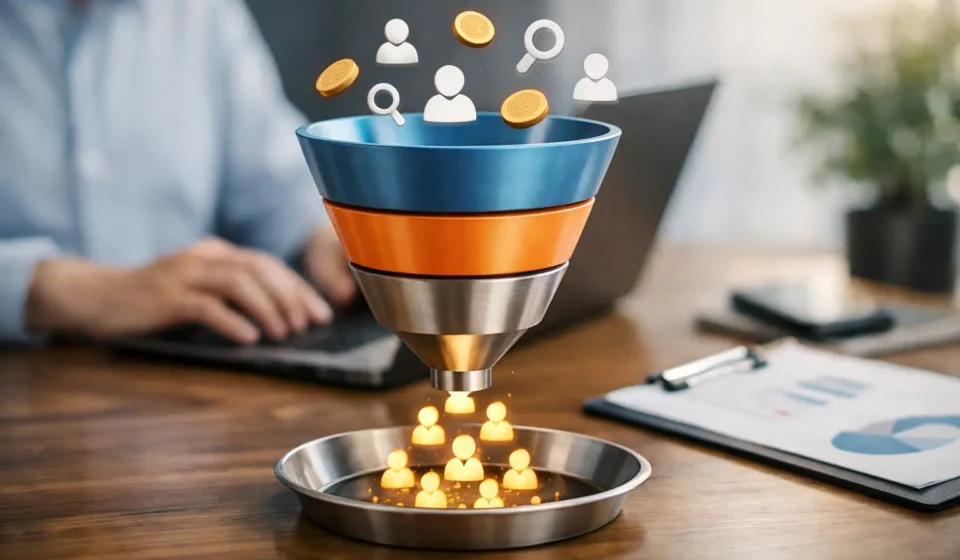
What Is a Lead Generation Funnel?
A lot of small businesses do not have a traffic problem. They have a conversion problem.
If people are visiting your website, finding your business on Google, or clicking your ads but not calling, booking, or filling out a form, the missing piece is usually structure. That is where the answer to what is a lead generation funnel becomes practical. A lead generation funnel is the path a potential customer follows from first discovering your business to becoming a qualified lead and, eventually, a paying client.
For local service businesses, that path should not feel complicated. It should feel clear, fast, and easy to act on. The right funnel helps you capture attention, build trust, collect contact information, and move people toward the next step without losing them along the way.
What is a lead generation funnel, really?
At its core, a lead generation funnel is a step-by-step system designed to turn interest into action. Instead of sending people to a generic website and hoping they figure out what to do, a funnel guides them toward one specific outcome, like booking an appointment, requesting a quote, or claiming an offer.
Think of it less like a brochure and more like a guided process. Someone sees your business through search, social media, a referral, or an ad. They land on a page that speaks to a clear need. They get enough information to trust you. Then they take a simple next step.
That is the basic idea, but the real value is what happens behind the scenes. A strong funnel does not stop at the form submission. It connects to your CRM, triggers follow-up emails or text messages, sends notifications to your team, and helps make sure leads do not sit untouched for two days while the customer moves on to a competitor.
For businesses that depend on appointments, estimates, consultations, or recurring client relationships, this matters a lot. Speed and consistency often decide who wins the lead.
Why local businesses need a funnel instead of just a website
A website still matters. It gives your business credibility, supports local SEO, and helps people learn about your services. But most websites try to do too many things at once. They talk to every type of visitor, promote multiple services, and often bury the action step.
A lead generation funnel is more focused. It is built around a single audience and a single goal.
If you run an acupuncture clinic, the funnel might center on new patient consultations. If you are a financial professional, it might focus on scheduling a strategy call. If you own a home service business, it may be about requesting a quote. In each case, the funnel removes extra decisions and makes the next move obvious.
That focus usually improves conversion rates because people do not have to search for what to do next. They are led there.
There is also a practical business reason. When your lead capture process is tied to automation and follow-up, you create a system that keeps working even when you are busy serving customers. That is a major difference between marketing that looks good and marketing that produces measurable results.
The main stages of a lead generation funnel
Most lead generation funnels follow a few core stages, even if the details vary by industry.
The first stage is attention. This is where someone discovers your business through Google search, local SEO, paid ads, social media, direct mail, or referrals. At this point, they may only know they have a problem or need.
The second stage is interest. Now they land on a page or offer that matches what they were looking for. This page needs to be relevant and specific. Generic messaging loses people quickly. Clear headlines, a simple service promise, and proof that you understand their situation are what keep them engaged.
The third stage is conversion. This is the moment they submit a form, call, book online, request pricing, or opt in for an offer. If your funnel is doing its job, this step feels easy. Too many fields, too much clutter, or unclear instructions can cause drop-off right here.
The fourth stage is follow-up. This is where many businesses fall short. A lead comes in, but there is no immediate response, no confirmation, and no consistent nurture process. A modern funnel should include email, SMS, missed-call text back, reminders, and internal notifications when appropriate. Follow-up is not an extra feature. It is part of the funnel.
The final stage is qualification and close. Not every lead is ready today, and not every lead is the right fit. A good funnel helps sort serious prospects from casual inquiries, so your team can focus time where it counts.
What a good lead generation funnel includes
A lead generation funnel does not need to be flashy. It needs to be clear and connected.
In most cases, that means a focused landing page, a strong offer or reason to act, a simple form or booking option, and trust elements such as testimonials, reviews, credentials, FAQs, or proof of results. It should also include mobile-friendly design because a large share of local traffic comes from phones.
Just as important, the funnel should connect to the systems behind it. If your form goes nowhere, or if your booking tool is separate from your follow-up, you create friction for both your team and the customer.
This is one reason many growing businesses move toward an all-in-one setup. When your website, funnel, CRM, scheduling, and automation tools work together, it is easier to track leads, respond quickly, and improve performance over time. Local Build Digital is built around that kind of connected growth system because most small businesses do not need more disconnected tools. They need one process that works.
What is a lead generation funnel not?
It is not just a website form.
It is not a paid ad campaign by itself.
It is not an email sequence with no clear destination.
And it is definitely not a one-time setup you ignore for a year.
A funnel is a system. It includes the traffic source, the page experience, the conversion point, and the follow-up process after the lead comes in. If one part is weak, the whole system feels weaker.
For example, you can run great ads and still struggle if the landing page is unclear. You can have a polished page and still lose leads if nobody follows up fast enough. You can even collect plenty of inquiries and still waste budget if the wrong people are filling out your forms.
That is why strategy matters. A funnel should match the way your customers actually make decisions.
How different businesses use lead generation funnels
The exact setup depends on your service, sales cycle, and customer behavior.
A local med spa may use a funnel built around a limited-time treatment offer with online scheduling and automated appointment reminders. A tax or financial firm may use a consultation funnel that collects a few qualifying details before booking a call. A contractor may need a quote-request funnel with service area screening, photo upload options, and quick text follow-up.
There is no single perfect version. Shorter funnels often work well for lower-friction offers, while higher-ticket or trust-sensitive services may need more education and stronger proof before the lead converts. That is normal.
The goal is not to force every business into the same template. The goal is to create a path that fits how your buyers move from interest to action.
Signs your funnel needs work
If traffic is coming in but leads are inconsistent, your funnel may be leaking.
Common signs include high website traffic with few inquiries, lots of form submissions from poor-fit prospects, slow response times, missed calls that go unanswered, or leads that book but fail to show up. Another red flag is when you cannot easily tell where your best leads came from.
These problems are common, especially when businesses piece together separate tools over time. The fix is usually not more complexity. It is better alignment between your messaging, your offer, and your follow-up.
Building a funnel that actually helps your business grow
The best lead generation funnel is the one your team can use consistently and your customers can move through easily.
That usually means starting with one service, one audience, and one conversion goal. Keep the message specific. Reduce distractions. Make the next step obvious. Then support it with automation that confirms the lead, follows up quickly, and keeps your pipeline organized.
From there, you improve based on real behavior. Maybe your form is too long. Maybe your offer is too broad. Maybe your page gets traffic from mobile users, but the booking experience is clunky. Small improvements in these areas can create a noticeable lift in lead volume and quality.
A funnel is not magic. It is structure. And for small businesses that want more calls, more bookings, and less chaos in the process, structure is often what creates momentum.
If you have been wondering why marketing feels busy but results feel uneven, a better funnel may be the missing piece. Start by making the customer journey simpler than it is today. That alone can change a lot.