


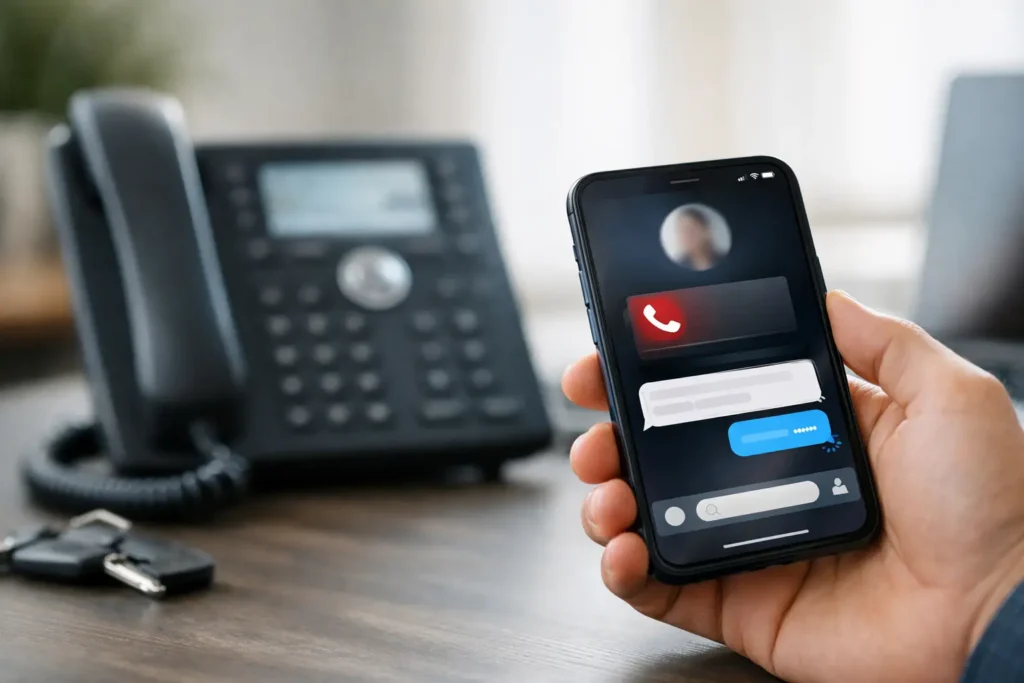
A ringing phone that goes unanswered is not just an interruption. For a local service business, it can be a new patient looking for an acupuncturist, a homeowner ready to book a repair, or a prospect comparing financial advisors. A missed call text back gives that person an immediate next step while your team is serving customers, driving between jobs, or simply unable to answer.
The goal is not to replace real conversations. It is to protect the opportunity until one can happen. When a caller receives a clear, helpful text within seconds, they know they reached a real business that values their time. That small moment can be the difference between a booked appointment and a lead who calls the next provider on the list.
Why missed calls cost more than one lead
Local customers often call when they are ready to act. They may have found your business through a Google search, read a few reviews, and picked up the phone because they want availability, pricing guidance, or an answer now. If no one responds, most will not wait around for a voicemail callback.
The cost is also larger than the first missed call. A delayed response can make your business seem difficult to reach, even when your team is busy doing excellent work. For appointment-driven practices and service providers, that perception affects trust before the first conversation begins.
Staffing more people on the phone is one answer, but it is not always practical. Owners should not have to choose between giving a client their full attention and capturing the next inquiry. An automated response creates coverage during busy hours, after hours, lunch breaks, and those unavoidable moments when every line is occupied.
What a missed call text back should do
A strong missed call text back is short, personal, and designed to move the conversation forward. It should confirm that the caller reached the right business, set an honest expectation for follow-up, and offer an easy action such as replying by text or booking an appointment.
For example:
> Hi, this is Maya from Harbor Wellness. Sorry we missed your call. How can we help today? You can reply here, and we will get back to you shortly.
That message works because it sounds human and asks a simple question. It does not force the caller to explain everything again through a long form or wait without direction.
If your business offers online scheduling, you can add a booking option when it makes sense:
> Thanks for calling North Coast Tax Advisors. We are assisting clients right now. Reply with your question, or use our online scheduler to choose a consultation time that works for you.
The best approach depends on the customer journey. A plumber handling urgent calls may want the text to ask for the service address and issue. A wellness practice may prioritize scheduling. A financial professional may invite the lead to share the best time for a callback. The common thread is speed and a clear next step.
Keep the message useful, not overengineered
Avoid turning the first text into a sales pitch. A long message packed with promotions, multiple links, and disclaimers can feel automated in the wrong way. The caller needs reassurance first.
Use your business name, write in a natural tone, and avoid promising a callback time you cannot consistently meet. If you say someone will respond in 10 minutes, make sure your process supports that standard. Reliability builds more trust than aggressive wording ever will.
Build the follow-up around real business hours
Automation works best when it reflects how your business actually operates. Start by deciding when a text should send. Many businesses trigger it whenever an inbound call is missed, but you may want different messages during open hours and after hours.
During business hours, tell the caller your team is assisting someone and invite them to reply. After hours, set expectations clearly: acknowledge the message, explain when the team will return, and offer scheduling if available. This keeps your communication helpful without implying that someone is on call when they are not.
A practical workflow often looks like this: the missed call triggers an immediate text, the caller replies with their need, and the conversation lands in one shared inbox. From there, the right team member can respond, assign the lead, add notes, and schedule the next step. No sticky notes, lost voicemails, or separate apps to check.
This is where connected systems matter. Your website, phone activity, CRM, calendar, and SMS conversations should support the same customer journey. When they are disconnected, leads fall through gaps. When they work together, your team can see who called, what they need, and whether they booked.
Turn replies into appointments, not endless texting
Getting a reply is only the first win. The next job is moving the conversation toward a qualified lead, scheduled visit, or service call without creating unnecessary back-and-forth.
Train your team to respond with direct, useful questions. If someone texts, “Do you have openings this week?” do not answer only, “Yes.” Offer two available windows or send them to a scheduling page. If they ask about a service, answer the question briefly and suggest the appropriate next step.
For higher-value services, a personal callback may be better than trying to close everything by text. The automated message earns time and captures intent; a knowledgeable team member builds the relationship. Automation should make human follow-up faster and more organized, not eliminate it.
Response time still matters after the first text. An instant automated reply followed by silence for hours can feel just as frustrating as no reply at all. Set ownership rules so someone checks active conversations, especially during the periods when calls are most likely to come in.
Measure what happens after the missed call
Do not judge the system only by how many texts it sends. Track the numbers that show whether it is producing business results: missed calls, text replies, conversations started, appointments booked, estimates requested, and customers won.
You may find that certain days or hours generate more missed-call opportunities. That insight can help with staffing, ad scheduling, and call handling. You may also discover that one message drives better replies than another. Test wording carefully, but keep the experience simple and consistent.
It is also worth looking at lead source. A missed call from a local search listing, a paid ad, and a referral may need different follow-up paths. A CRM that records the source gives your team better context and helps you invest in the channels producing real bookings.
Use automation with care
Text messaging is personal. Businesses should use a missed call text back for people who have actively called them, identify themselves clearly, and provide a straightforward way to stop messages where appropriate. Follow applicable consent, privacy, and messaging requirements, especially if you plan to send promotional follow-ups later.
Be thoughtful about sensitive industries as well. Medical, legal, and financial conversations may require additional safeguards. Keep the initial message general, avoid requesting private information by text, and move detailed discussions into the proper secure process.
Automation also needs a human escape hatch. If a caller has an urgent problem, a complaint, or a complex question, your workflow should flag that conversation for prompt personal attention. The right technology creates momentum, but judgment still belongs to your team.
Make every call part of a stronger lead system
A missed call response is most valuable when it is not a standalone tool. It should connect to the way your business attracts leads, manages conversations, schedules appointments, and follows up after the first interaction. That is how a quick text becomes a reliable revenue process rather than another disconnected app.
For local businesses, the opportunity is straightforward: people are already raising their hand by calling. Give them a fast, respectful response and an easy path to continue. The businesses that do this consistently do not just recover missed calls. They make it easier for ready-to-buy customers to choose them.