


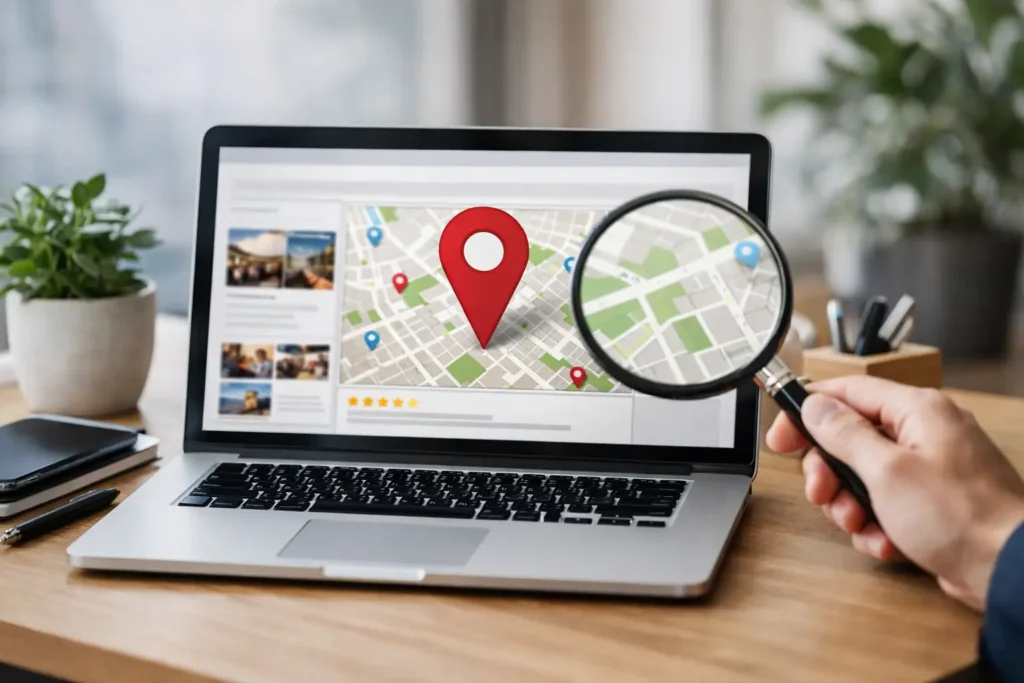
A lot of local businesses don’t have a traffic problem. They have a visibility and conversion problem. Someone nearby searches for a service, sees a map result, scans a few profiles, and makes a decision in under a minute. That is why google business profile optimization matters so much. It is often the first impression, the first trust signal, and the first chance to turn local search into a real lead.
For service businesses, appointment-based practices, and professional firms, your profile is not just a listing. It is a sales asset. When it is incomplete, inconsistent, or outdated, you lose calls and bookings to competitors that may not even offer better service. When it is optimized correctly, it helps you show up more often, look more credible, and move prospects toward action with less friction.
Why Google Business Profile optimization affects real revenue
A strong profile helps in two places at once. First, it supports local visibility in Google Maps and local search results. Second, it improves conversion when people do find you. That combination is what makes it valuable.
Most business owners focus on ranking, which makes sense. But profile optimization is also about what happens after the impression. If a potential customer sees clear services, strong reviews, updated photos, accurate hours, and an easy path to call or book, your profile starts doing part of the sales work for you.
That matters even more for businesses where trust drives the decision. An accountant, acupuncturist, med spa, contractor, attorney, or home service provider is rarely chosen on price alone. People look for legitimacy, responsiveness, and proof that you serve their area well. Your profile communicates all of that before someone ever reaches your website.
What Google actually wants from your profile
Google’s goal is simple. It wants to show users the most relevant, reliable local result for a search. That means your profile should make it easy for Google to understand what you do, where you operate, and why users trust you.
That starts with fundamentals. Your business name, primary category, secondary categories, phone number, website, hours, and service areas all need to be accurate. It sounds basic because it is basic, but many businesses get this wrong. A wrong category or an old phone number can quietly hurt performance for months.
Then comes completeness. Profiles with strong descriptions, service listings, photos, posts, and recent reviews tend to give both Google and the customer more confidence. Optimization is not about stuffing in keywords everywhere. It is about creating a profile that clearly matches real searches and helps real people choose you.
The parts of Google Business Profile optimization that move the needle
The first big lever is category selection. Your primary category has a major impact on which searches you appear for. If you are a family law practice but your category is too broad, or if you are a med spa listed under a less relevant service type, you may be telling Google the wrong story. Secondary categories help, but the primary one carries the most weight.
Your business description matters too, though not in a magical SEO way. It helps reinforce your services, location focus, and customer value. A good description is clear and specific. It should explain what you do, who you help, and what makes your service experience better. That is more persuasive than vague marketing language.
Services and products are often overlooked. These fields help connect your profile to more specific searches, especially when users are looking for a particular treatment, service type, or specialty. If you offer tax planning, sports acupuncture, roof repair, or estate planning, those should be reflected in the profile rather than left implied.
Photos are another major factor, especially for conversion. People want to see your office, team, branding, equipment, exterior signage, and the quality of your presentation. For some businesses, before-and-after visuals or professional environment photos can create immediate trust. Low-quality, outdated, or missing images can do the opposite.
Reviews are where visibility and conversion overlap. Strong reviews improve trust with prospects, and a steady review flow can support local prominence over time. Quantity matters, but quality and recency matter too. A profile with excellent reviews from two years ago does not feel as active as one with recent, detailed feedback.
Reviews need a system, not occasional effort
Most businesses ask for reviews when they remember to. That approach creates inconsistent results. The better move is to build a process around the customer journey.
Ask at the right moment, usually after a positive outcome, successful visit, or completed project. Make the request simple and direct. Then follow up if needed through email or text. Businesses that treat review generation as part of operations, not a side task, usually build stronger profiles over time.
The response side matters too. Replying to reviews shows engagement, professionalism, and attentiveness. It also sends trust signals to future customers reading through your profile. Responses do not need to be long. They need to sound human, respectful, and aligned with your brand.
There is a trade-off here. Aggressive review requests can feel forced, especially in sensitive industries like healthcare or legal services. The right tone depends on your customer relationship and service model. The goal is steady momentum, not pressure.
Posts, updates, and Q&A still have a job to do
Some business owners assume Google posts are not worth the time. That depends on how you use them. They are unlikely to transform rankings on their own, but they can support freshness, highlight offers, reinforce services, and create another trust layer for people comparing options.
If you run seasonal promotions, announce new services, share local updates, or want to feature a specific offer, posts can help. The key is consistency and relevance. Random posts with generic language do very little.
The Q&A section is another underused area. Customers often have the same pre-booking concerns about pricing, insurance, service areas, appointment timing, or what to expect. Addressing those questions in advance can reduce hesitation and improve lead quality.
Google Business Profile optimization works best when it connects to your full system
This is where many businesses hit a ceiling. They optimize the profile, get more calls or form fills, and then lose momentum because follow-up is inconsistent or the website experience is weak.
A profile can generate interest, but it cannot carry the entire customer journey by itself. If someone clicks through to an outdated website, cannot book easily, or never hears back after reaching out, the visibility you gained does not translate into revenue.
That is why the best results come from connecting your profile to the rest of your digital infrastructure. Your website should match the trust and clarity of the profile. Your scheduling flow should be easy. Your CRM should track leads. Your follow-up should happen automatically when possible. For businesses trying to grow without adding chaos, that integrated setup usually outperforms isolated marketing tactics.
For example, a wellness practice may improve profile visibility and start getting more appointment inquiries, but if missed calls are not followed by a text response or booking reminder, opportunities still slip away. A financial professional may rank well locally, but if the landing page lacks clear service positioning, conversion stays low. Optimization works best when discovery, conversion, and follow-up all connect.
Common mistakes that quietly hurt performance
One of the biggest mistakes is treating the profile like a one-time setup. Local search is dynamic. Competitors change, reviews come in, services evolve, and Google updates features over time. A profile that was fine six months ago may now be underperforming.
Another mistake is using the wrong business name format or inconsistent contact details across platforms. Even small mismatches can create confusion. Keyword stuffing is also a problem. It can make your profile look unnatural and does not build trust with customers.
Some businesses also choose broad service areas with weak local relevance. More coverage is not always better. If you realistically serve a tighter geography and have stronger proof there, focus on that first. Local authority often grows better from specificity than from trying to appear everywhere at once.
How to think about results
Google Business Profile optimization is not a switch you flip. It is a practical growth channel that improves with steady attention. You may see quick wins from correcting categories, updating information, and improving reviews. Bigger gains usually come from consistency over time.
The right benchmark is not just whether you rank for a keyword. It is whether your profile generates more qualified calls, more bookings, better lead quality, and less wasted opportunity. That is the real business case.
If your profile is getting views but not action, the issue is probably trust or conversion. If you are not getting visibility at all, the issue may be relevance, completeness, competition, or a weak broader local presence. It depends on the market, the service category, and how connected your marketing system is behind the scenes.
For local businesses that want growth without adding more complexity, start here: make your profile accurate, complete, active, and aligned with how customers actually choose. Then make sure the next step after the click is just as strong. That is where local visibility starts turning into steady momentum.