


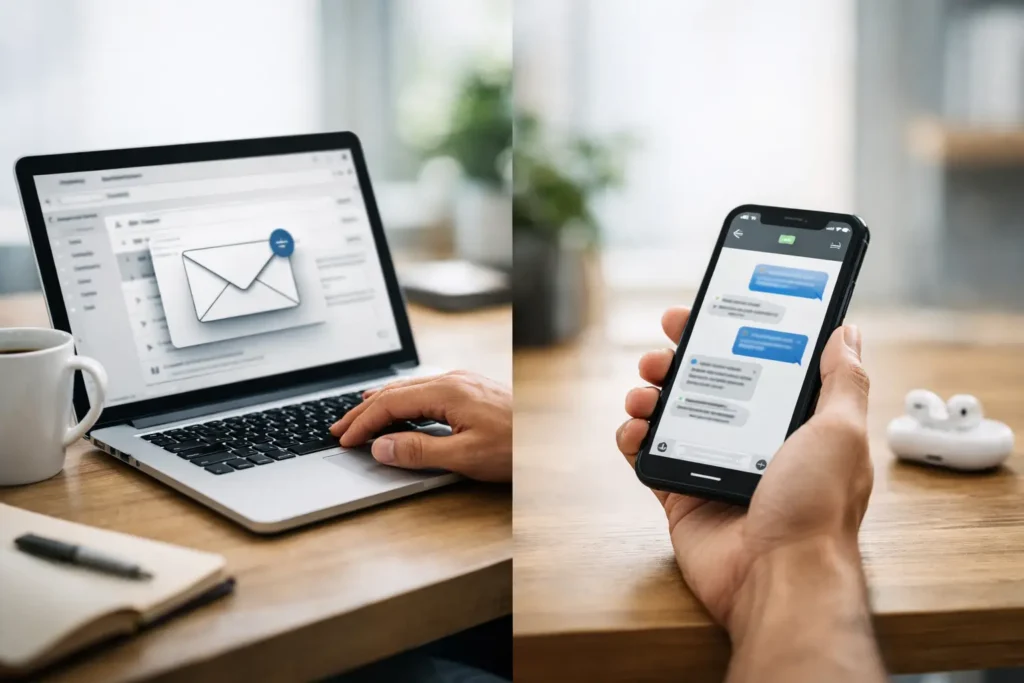
A new inquiry is at its most valuable in the first few minutes after it arrives. Whether someone requested an estimate, downloaded a guide, or started booking an appointment, they are actively looking for a solution. The question is not simply email vs sms follow up. It is which channel gives that person the right next step without creating friction, pressure, or missed opportunities.
For local service businesses, the best answer is rarely choosing one channel forever. Email and text messages do different jobs. When they are connected through a CRM and automation system, they can help your business respond faster, stay organized, and turn more inquiries into real conversations and booked appointments.
Email vs SMS Follow Up: The Core Difference
Email gives you room to explain, educate, and build credibility. SMS gets seen quickly and makes it easy for a prospect to take one small action. One is not automatically better than the other. The right choice depends on how urgent the request is, how much information the customer needs, and where they are in the decision process.
A homeowner who wants an emergency repair is unlikely to read a long email before choosing a provider. A financial planning prospect considering a long-term relationship may need time to review your approach, credentials, services, and next steps. An acupuncture patient may appreciate a quick booking reminder by text, then a helpful email that answers questions about their first visit.
Think of SMS as the fast lane for timely communication. Think of email as the place to provide context and continue the relationship.
When SMS Follow Up Is the Better Choice
Text messaging is strongest when speed and simplicity matter. Most people keep their phones close, and a concise, useful message can move a fresh lead from curiosity to action before they contact another business.
SMS works particularly well after a form submission, missed call, appointment request, or abandoned scheduling flow. A short message such as, “Hi Jamie, this is Alex from Oak Valley Plumbing. We received your request and can help. Would you like the next available appointment today or tomorrow?” gives the prospect an easy response path.
It is also highly effective for appointment confirmations, reminders, arrival notices, rescheduling links, review requests, and brief check-ins. These are time-sensitive moments when customers benefit from a direct prompt rather than a message buried in an inbox.
The trade-off is that text messages have very little room for detail. A long paragraph, multiple offers, or several links can feel intrusive and reduce replies. Keep the message focused on one clear next action: reply, choose a time, confirm an appointment, or call your office.
SMS should also be permission-based. Make sure leads clearly opt in to receive text messages, identify your business, provide an easy way to opt out, and follow applicable messaging rules. Fast follow-up only helps when it protects trust.
A practical SMS timing rule
For hot leads, send an immediate acknowledgment within a few minutes, then make the human follow-up clear. Automation can say, “Thanks, we got your request,” but it should not pretend to be a personal response if no one has reviewed the details yet.
If a lead does not reply, one follow-up text the next business day is often reasonable. Beyond that, shift the conversation to email or a call unless the person continues engaging. Repeated texts can feel like pressure, especially for high-consideration services.
When Email Follow Up Does More Work
Email is the better channel when a prospect needs more information before taking action. It gives your business the space to answer common questions, explain your process, share what makes your service different, and prepare someone for a sales conversation.
For example, a financial advisor can follow an initial inquiry with a concise email describing who the practice serves, what happens during a first consultation, and how to schedule. A wellness provider can explain what a new patient can expect, how long an appointment takes, and how to complete intake forms. A contractor can outline the estimate process and the information needed to provide accurate pricing.
That detail creates confidence. It also reduces repetitive questions for your team, because the lead receives useful answers before they reach the phone.
Email is ideal for nurturing leads who are interested but not ready to book. Someone researching a website redesign or local SEO package may need several touchpoints over a few weeks. A well-planned email sequence can share relevant examples, address objections, and remind them that a clear path to help is available when the timing is right.
The downside is speed. Even a well-written email may sit unopened for hours or days. For time-sensitive requests, email alone can leave revenue on the table.
Keep nurturing emails useful, not noisy
A good follow-up email does not need to be long. Start with the person’s stated need, provide one or two helpful details, and offer a simple next step. Avoid sending generic promotions that ignore why they contacted you in the first place.
For appointment-driven businesses, a strong first email may include the appointment link, a brief explanation of what happens next, and a direct phone number for questions. For quote-based businesses, it may request the photos, address, or project details needed to prepare an estimate. Relevance matters more than sending more messages.
Use Both Channels in a Connected Follow-Up System
The most effective approach for many local businesses is not email or SMS. It is a coordinated sequence where each channel supports the other.
Imagine a prospective patient submits an online appointment request. An automated text can confirm receipt and invite them to select a time. At the same time, an email can provide new-patient information, directions, and answers to common questions. If they book, the system sends a confirmation and reminder. If they do not, a team member sees the lead in the CRM and can call or send a personal message based on the conversation history.
This is where connected digital infrastructure makes a measurable difference. When website forms, scheduling, email, SMS, and lead records live in disconnected tools, leads fall through gaps. A business may respond late, send duplicate messages, or have no clear view of which follow-up actually generated the appointment.
With one coordinated system, you can track the source of each lead, automate immediate responses, assign conversations to the right team member, and see whether leads booked, replied, or went quiet. Local Build Digital helps businesses build these systems so follow-up becomes a reliable process instead of a daily scramble.
Match the Channel to Lead Temperature
A simple way to decide between email and SMS is to look at lead temperature. Hot leads have a clear, immediate need and usually deserve a fast text response plus a phone call when appropriate. Warm leads have shown interest but need more confidence, information, or time, making email nurturing especially useful. Cold or older leads may respond better to a thoughtful re-engagement email than an unexpected text.
Consider the value and complexity of the service as well. A $79 service appointment can often be booked with a few quick messages. A multi-thousand-dollar project usually requires education, qualification, and a conversation with a real person. Text can open the door, but email and phone follow-up may do more of the selling.
Customer preference should guide the process too. If a lead replies by email with detailed questions, continue there. If they text back quickly and ask for availability, do not force them into an inbox. The goal is to make it easier to buy from you, not to make every customer follow the same script.
Build Follow Up Around the Next Best Action
The strongest follow-up campaigns are not built around a channel. They are built around the next action that helps a lead move forward.
For one lead, that action may be picking an appointment time. For another, it may be sending photos for an estimate, completing an intake form, or speaking with a specialist. Every message should make that action obvious. If the recipient has to guess what to do next, the follow-up is doing too much or not enough.
Review your current lead journey from the customer’s perspective. Submit a test form, call after hours, request an appointment, and see what happens. Is there an immediate confirmation? Does the message sound human? Can the lead schedule without calling back? Does your team know who needs attention next?
The next lead who contacts your business has already taken the hardest first step: asking for help. A timely text, a useful email, and a clear process can make sure that effort turns into a conversation worth having.