


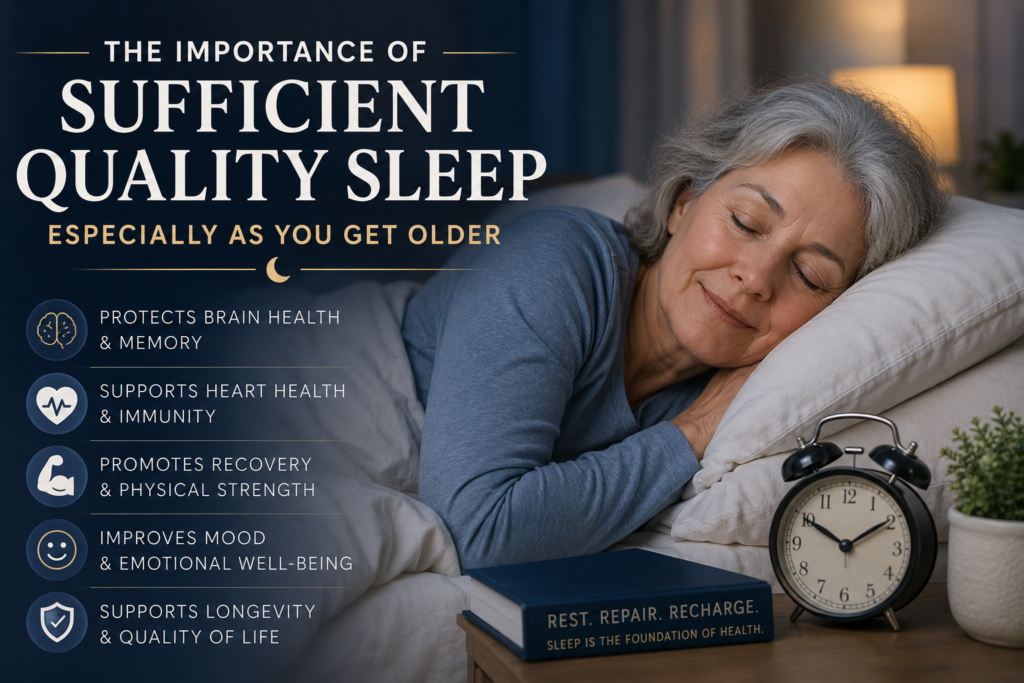
In today’s fast-paced world, sleep is often treated as a luxury rather than a necessity. Many people proudly wear sleep deprivation as a badge of honor, believing that sacrificing rest allows them to accomplish more. However, science tells a very different story. Sleep is not wasted time—it is one of the most important biological processes for maintaining physical health, mental clarity, emotional stability, and long-term well-being.
While quality sleep is essential at every stage of life, its importance becomes even greater as we age. The body undergoes numerous physiological changes over time, and adequate sleep plays a critical role in helping us adapt, recover, and thrive throughout the aging process.
Whether you are in your 30s, 40s, 50s, 60s, or beyond, understanding the value of sleep can help improve your health today while protecting your future quality of life.
Understanding Sleep: More Than Just Rest
Sleep is often viewed as a passive activity. In reality, it is one of the most active and complex processes occurring within the body.
During sleep, the brain and body perform essential maintenance functions, including:
- Repairing tissues
- Building muscle
- Regulating hormones
- Strengthening the immune system
- Consolidating memories
- Processing emotions
- Removing waste products from the brain
Sleep occurs in multiple stages, including:
Stage 1: Light Sleep
This is the transition between wakefulness and sleep.
Stage 2: Deeper Sleep
Heart rate slows, body temperature decreases, and the body prepares for restorative sleep.
Stage 3: Deep Sleep
This stage is critical for physical recovery, growth hormone production, and immune function.
REM Sleep
Rapid Eye Movement (REM) sleep is associated with dreaming, memory formation, learning, and emotional processing.
Each stage plays a vital role in maintaining overall health.
Why Sleep Changes as We Age
Many adults notice that their sleep patterns change over time.
Common age-related sleep changes include:
- Difficulty falling asleep
- Frequent awakenings
- Earlier wake times
- Reduced deep sleep
- Increased sensitivity to noise
- More fragmented sleep cycles
These changes occur due to shifts in hormone production, circadian rhythms, medical conditions, medications, and lifestyle factors.
Although some changes are natural, poor sleep should not simply be accepted as an unavoidable part of aging.
Maintaining quality sleep becomes increasingly important because the body’s ability to recover and repair itself naturally declines with age.
Sleep and Brain Health
One of the most important reasons to prioritize sleep is its impact on cognitive health.
During sleep, the brain performs a remarkable housekeeping process.
Researchers have discovered that the brain’s glymphatic system becomes highly active during sleep. This system helps remove waste products and toxins that accumulate throughout the day.
One of these waste products is beta-amyloid, a protein associated with Alzheimer’s disease.
Insufficient sleep may contribute to the accumulation of these harmful substances over time.
Quality sleep helps support:
- Memory retention
- Concentration
- Learning
- Problem-solving abilities
- Decision-making skills
As people age, protecting cognitive function becomes increasingly important, making sleep a critical component of healthy aging.
Sleep and Memory Formation
Have you ever studied for an exam, learned a new skill, or practiced a new hobby?
Sleep is essential for transforming short-term experiences into long-term memories.
During sleep, the brain organizes and strengthens neural connections.
This process helps:
- Retain new information
- Improve learning efficiency
- Strengthen procedural skills
- Enhance creativity
For older adults, maintaining strong memory function can significantly improve independence and quality of life.
Sleep and Emotional Health
Sleep affects far more than physical recovery.
A lack of sleep can dramatically impact emotional regulation.
People who consistently experience poor sleep are more likely to report:
- Irritability
- Anxiety
- Depression
- Mood swings
- Increased stress levels
During REM sleep, the brain processes emotional experiences and helps regulate emotional responses.
Without adequate sleep, individuals may find themselves reacting more strongly to everyday challenges and experiencing heightened emotional sensitivity.
As life becomes more complex with age, emotional resilience becomes increasingly valuable.
Sleep and Heart Health
Cardiovascular disease remains one of the leading causes of death worldwide.
Sleep plays a significant role in maintaining heart health.
During sleep:
- Blood pressure decreases
- Heart rate slows
- Blood vessels recover from daily stress
Chronic sleep deprivation has been linked to:
- High blood pressure
- Heart disease
- Stroke
- Irregular heart rhythms
Researchers have found that consistently getting fewer than six hours of sleep per night may increase cardiovascular risk over time.
Prioritizing sleep can help support a healthier cardiovascular system throughout life.
Sleep and the Immune System
The immune system relies heavily on quality sleep.
While sleeping, the body produces important immune cells and proteins that help defend against illness.
Poor sleep can weaken immune function, making individuals more susceptible to:
- Colds
- Flu
- Infections
- Prolonged recovery times
As people age, immune function naturally declines.
Adequate sleep becomes even more important because it helps strengthen the body’s ability to defend itself against disease.
Sleep and Hormonal Balance
Sleep influences numerous hormones responsible for regulating health.
These include:
Growth Hormone
Supports tissue repair and muscle maintenance.
Cortisol
The body’s primary stress hormone.
Insulin
Regulates blood sugar levels.
Leptin and Ghrelin
Control hunger and satiety signals.
Insufficient sleep can disrupt these hormonal systems, contributing to:
- Weight gain
- Increased cravings
- Insulin resistance
- Elevated stress levels
Maintaining healthy hormone balance becomes increasingly important as metabolism naturally slows with age.
Sleep and Weight Management
Many people focus on diet and exercise when trying to maintain a healthy weight.
However, sleep is often overlooked.
Research consistently shows that inadequate sleep can increase appetite and cravings, particularly for:
- Sugary foods
- Processed carbohydrates
- High-calorie snacks
Sleep deprivation alters hunger-regulating hormones, causing individuals to feel hungrier even when they have consumed enough calories.
Quality sleep supports healthier food choices and more effective weight management.
Sleep and Muscle Recovery
As people age, preserving muscle mass becomes increasingly important.
Muscle loss, known as sarcopenia, can contribute to:
- Reduced mobility
- Increased fall risk
- Loss of independence
Sleep is a critical time for muscle repair and recovery.
Growth hormone production peaks during deep sleep, supporting tissue repair and muscle maintenance.
Individuals who exercise regularly should view sleep as a key component of their fitness program.
Sleep and Longevity
Numerous studies suggest a strong relationship between sleep quality and lifespan.
Both insufficient sleep and excessive sleep have been associated with increased mortality risk.
While individual needs vary, most adults benefit from approximately:
7 to 9 Hours of Sleep Per Night
Consistently obtaining adequate sleep may help reduce the risk of:
- Cardiovascular disease
- Diabetes
- Obesity
- Cognitive decline
- Chronic inflammation
Quality sleep contributes to both longevity and healthspan—the number of years lived in good health.
Common Causes of Poor Sleep in Older Adults
Several factors can interfere with sleep quality:
Stress and Anxiety
Financial concerns, career pressures, family responsibilities, and health worries can affect sleep.
Medical Conditions
Conditions such as arthritis, sleep apnea, acid reflux, and chronic pain frequently disrupt sleep.
Medications
Certain medications may interfere with normal sleep patterns.
Reduced Physical Activity
A sedentary lifestyle can make it more difficult to fall asleep and stay asleep.
Excessive Screen Time
Exposure to blue light from electronic devices may disrupt melatonin production.
Practical Tips for Better Sleep
Improving sleep quality does not necessarily require dramatic changes.
Small habits can produce meaningful results.
Maintain a Consistent Sleep Schedule
Go to bed and wake up at the same time each day.
Limit Caffeine
Avoid caffeine later in the day.
Create a Relaxing Evening Routine
Consider:
- Reading
- Meditation
- Light stretching
- Journaling
Keep the Bedroom Cool and Dark
A comfortable sleep environment supports deeper sleep.
Exercise Regularly
Physical activity can improve both sleep quality and duration.
Reduce Screen Exposure Before Bed
Limit phone, tablet, and television use during the hour before bedtime.
The Long-Term Benefits of Prioritizing Sleep
Many people invest time and money into:
- Healthy eating
- Exercise
- Supplements
- Medical treatments
While these habits are valuable, none can fully compensate for chronic sleep deprivation.
Sleep influences nearly every system within the body.
When individuals consistently prioritize quality sleep, they often experience:
- Better focus
- Improved memory
- Greater emotional resilience
- Enhanced physical recovery
- Stronger immune function
- Healthier weight management
- Reduced disease risk
These benefits become increasingly important with each passing decade.
Final Thoughts
Sleep is not simply a period of inactivity. It is a powerful biological process that supports nearly every aspect of human health.
As we age, the body’s need for recovery, repair, and maintenance becomes even more important. Quality sleep helps protect the brain, heart, immune system, metabolism, and emotional well-being while supporting longevity and overall quality of life.
The good news is that improving sleep often begins with simple, consistent habits. By making sleep a priority today, individuals can invest in a healthier, stronger, and more vibrant future.
No matter your age, one of the most powerful things you can do for your health is also one of the simplest: get a good night’s sleep.